by Esi Aboagye
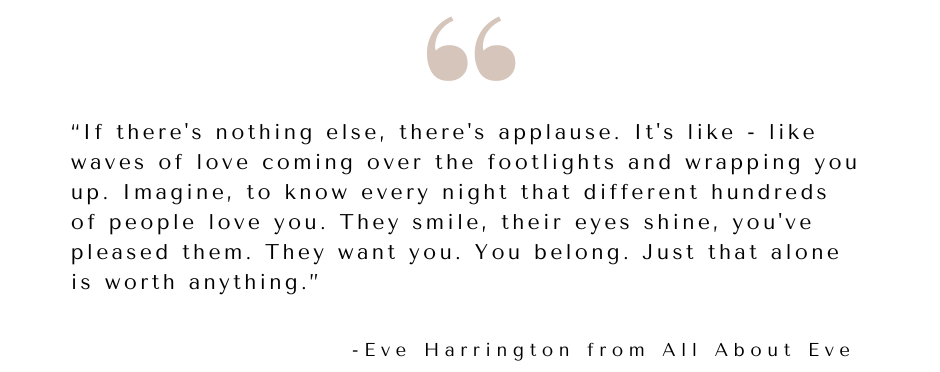
I’ve always been struck by this quote from All About Eve (1950). It’s said by Eve Harrington, an ingénue desperate for stardom. She plots and schemes throughout the film to take over the fans of a declining star. This desire for adoration propels her throughout the narrative and is her major character flaw.
It’s an acclaimed film that I’m terribly fond of but this quote also reminds me of monoculture. As a phenomenon, monoculture evokes that same desire to belong. Whether it’s celebrity figures, authors, films or media corporations, they want to be adored and known by the masses. The idea of being a household name is still chased by many. Corporations are especially incentivized to appeal to the masses because of the potential and need for profit. This often outweighs the desire for genuine art if it comes without marketability.
There was a time when monoculture moments retained lasting impact. For some, this could look like artists such as Prince, Madonna or even Britney Spears. Perhaps the biggest artist of all might be Michael Jackson. It seems like anyone, anywhere and at any time is, still, familiar with the King of Pop. Whether it’s the image of a glittering white glove, slick dance moves or an addictive beat, it seems even decades later, he’s known by the masses. That undeniable fame is a chief example of monoculture.
There have been other passing moments of monoculture in recent years. Like the Barbenheimer weekend of July 2023 when Barbie (2023) and Oppenheimer (2023) films were released simultaneously. People went to theatres in droves to see both films, often donning pink for Barbie. It became a cultural moment that many observed or were familiar with. With the decline of moviegoers in recent years, it was a callback to when films were often sites of monoculture.
More recently, the MLB World Series in October 2025 saw the Toronto Blue Jays and LA Dodgers matchup. The whirlwind series went to seven games and was watched by millions across Canada, the United States and Japan. The international appeal was because many major players had connections to other countries. Canada alone saw forty percent of our population tuning in to that heartbreaking final game. Moments like this almost seem like a collective experience everyone can relate to. That’s the seductive draw of monoculture; it makes us think we’re not so different after all.
Within the publishing world, there have been many book series that have crafted their own monoculture moments. From The Lord of The Rings and Harry Potter to The Hunger Games and even Twilight, they’ve all had lasting effects on the reading and writing world. They’ve spawned franchises that include blockbuster hits, award-winning soundtracks, video games, amusement parks and lifelong fans. They’ve transcended literature and become cultural. And many aspiring authors long for that same level of impact. To see their book series on shelves, to see their adaptations flicker across the big screen, to see their characters brought to life over and over and over again. They want it all.
But monoculture is not an attainable goal, only a lofty dream. The masses are more individualistic than ever and that time of being united through monoculture is gradually waning. I don’t view this decline as necessarily a bad thing. Microcultures and subcultures should be cultivated too. The level of impact may not be as widespread but it can be just as profound and just as deep to the right audience. As much as publishing houses are always hungry for the next Tolkien or Rowling, it’s not realistic. Not everyone can soar to new heights. Not everyone can appeal to the masses.
I’d like to think there’s room for both; space for microcultures to blossom and space for all of us to collectively awe in wonder during those monoculture moments. The human experience is more varied than ever and it’s okay if we don’t like all the same things. I still want my niche interests to flourish and I’m still excited for the next big thing. But hey, maybe that’s just my version of wanting it all.
Esi Aboagye is a Toronto-based writer and aspiring author. She is a University of Toronto alumna with a Master of Information and a Bachelor of Arts in English Literature. When not reading or writing, Esi can be found exploring bookbinding or guiltily binging reality TV shows. Some of her favourite authors are N.K. Jemisin, Octavia Butler, Fuyumi Ono and Sarah Monette. She admires how these authors explore the fantastical and speculative in worlds so much like, and unlike, our own.
The views and opinions expressed in blog posts are those of the authors and do not necessarily reflect the views or positions of all WiT members.
 Writers In Trees